Guangzhou Evergrande vs Real Madrid remains one of Asian football’s most searched hypothetical matchups, largely because the two clubs reached the summit of their respective continents at the same time. They never met in a competitive fixture, yet the prospect still carries unusual weight. Guangzhou Evergrande had become China’s dominant club under Marcello Lippi, while Real Madrid were assembling a global superpower around Cristiano Ronaldo, Sergio Ramos, Luka Modrić and Karim Benzema. On paper, Guangzhou Evergrande vs Real Madrid looked like a clash between an ambitious Asian project and the established hierarchy of European football. In practice。the calendar never provided the meeting fans wanted.The timing was tantalizing. Guangzhou Evergrande won the AFC Champions League in 2013, defeating FC Seoul over two legs, and returned to the continental final in 2015。when Luiz Felipe Scolari’s side beat Al Ahli. Real Madrid lifted the UEFA Champions League in 2014 and then won the FIFA Club World Cup in Morocco that December. That tournament offered the clearest route to a Guangzhou Evergrande vs Real Madrid encounter, but the draw placed the Chinese champions against Europe’s representatives only in the realm of possibility. Real Madrid defeated Cruz Azul in the semifinal and San Lorenzo in the final, while Guangzhou did not qualify for that edition. A single bracket change could have turned Guangzhou Evergrande vs Real Madrid from a discussion point into a broadcast event.Guangzhou’s closest brush with that level of attention came in the 2015 Club World Cup, where the team faced Barcelona in the semifinal. The result was 3-0 to the Spanish side, with Luis Suárez scoring twice and Lionel Messi absent because of illness. The scoreline was decisive, but it did not make Guangzhou look insignificant. The Chinese club defended in compact lines, worked hard without the ball and created moments through Paulinho and Ricardo Goulart. That performance gives the Guangzhou Evergrande vs Real Madrid debate some substance: the gap was real, yet the Chinese champions were not merely tourists. They were organized。experienced and capable of forcing an elite opponent to stay alert for long stretches.
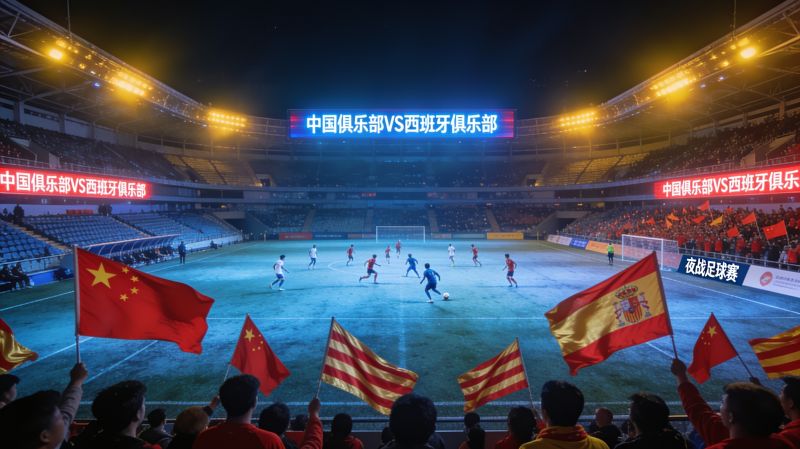
A hypothetical Guangzhou Evergrande vs Real Madrid match would have turned on tempo more than reputation. Real Madrid could attack through rapid switches, individual dribbling and diagonal runs behind the defense. Guangzhou, meanwhile, would likely rely on disciplined spacing, counterattacks and set pieces, with Paulinho’s late movement offering a practical route into the game. The tactical problem would be severe. If Guangzhou pressed too high, Real Madrid’s midfield could play through the first wave and expose the space behind it. If Guangzhou sat too deep, Ronaldo and Benzema would receive repeated service near the penalty area. My view is that a one-off match in 2015 might have stayed competitive for an hour。but Real Madrid’s bench, speed and experience would eventually have separated the teams.The story behind Guangzhou Evergrande vs Real Madrid is therefore less about an unplayed fixture than about football’s changing geography. Guangzhou showed that sustained investment, strong recruitment and continental ambition could produce an Asian club able to share the stage with Europe’s best。even if the financial and technical distances remained substantial. Real Madrid represented the finished global model;Guangzhou represented a rapidly rising challenger still searching for its place. Had Guangzhou Evergrande vs Real Madrid appeared on an official team sheet, the match would have attracted enormous attention across China and beyond. It also would have offered a useful test of whether Asian club football could turn impressive regional dominance into genuine parity on the world stage.