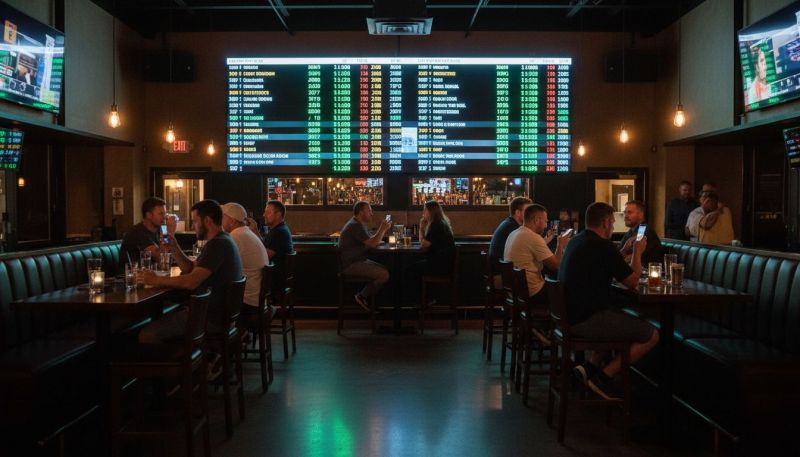
hree minutes before kickoff at a Cotai sports bar, the Macau odds on a Portuguese league match flipped from 2.10 to 1.85 on the home side. Nobody in the room blinked. A guy in a faded Benfica shirt just laughed, tapped his phone twice, and said the line had been "chasing money all afternoon." That small moment explains more about how this market actually works than any glossary ever could.I spent a Saturday watching how prices move here, and the pattern was hard to miss. Macau odds are not set in a vacuum and then frozen;
they breathe. A local operator I spoke with, who has priced football for eleven years, described his morning routine as "reading the room before reading the teams." He checks overnight Asian handle, then European books, then his own liability. If too much money sits on one side。the number shifts whether or not the underlying form has changed. On that Portuguese match, the away side had drawn heavy backing from a cluster of accounts he politely called "sharp regulars," so the price drifted against them within ninety minutes. The result?A 1-1 draw. The bookmaker's margin held. The bar's mood soured anyway.Here is the part casual punters get wrong. They treat the number as a prediction. It is closer to a price tag, and like any price tag it reflects supply, demand。and the seller's need to protect himself. A 1.85 favourite is not a 54% certainty handed down from on high;it is what the operator needs you to accept so the book balances. I watched a regular named Ho argue the opposite for twenty minutes, insisting the odds "knew" something about a late injury. Maybe they did. More likely, a handful of big accounts simply leaned on one side and the market followed. Both stories are plausible. Only one of them keeps the lights on.
What struck me most was the gap between perception and arithmetic. Two friends at the same table bet the same match, one at 1.85 and one at 2.05, because they used different platforms and placed bets forty minutes apart. Same game。same teams, twenty cents of difference. Over a season that gap quietly decides who is profitable and who is not. Nobody talks about it, because it is boring. Boring is where the money lives. The flashy stuff, the last-second goals, the dramatic comebacks, those are the stories people retell. The two-cent edge is the story that actually pays rent.
My takeaway from the weekend is unsentimental. Macau odds reward patience and punish urgency. The people who seemed calmest were the ones who had already done their homework, set a price in their head, and walked away when the market disagreed. The loudest guy in the room lost twice before halftime. Draw whatever conclusion you like from that。but the pattern repeated all afternoon, and I stopped counting after the fourth time.